
Our family-owned Acadian bakery story
Four Generations of d’Eons

Arthur
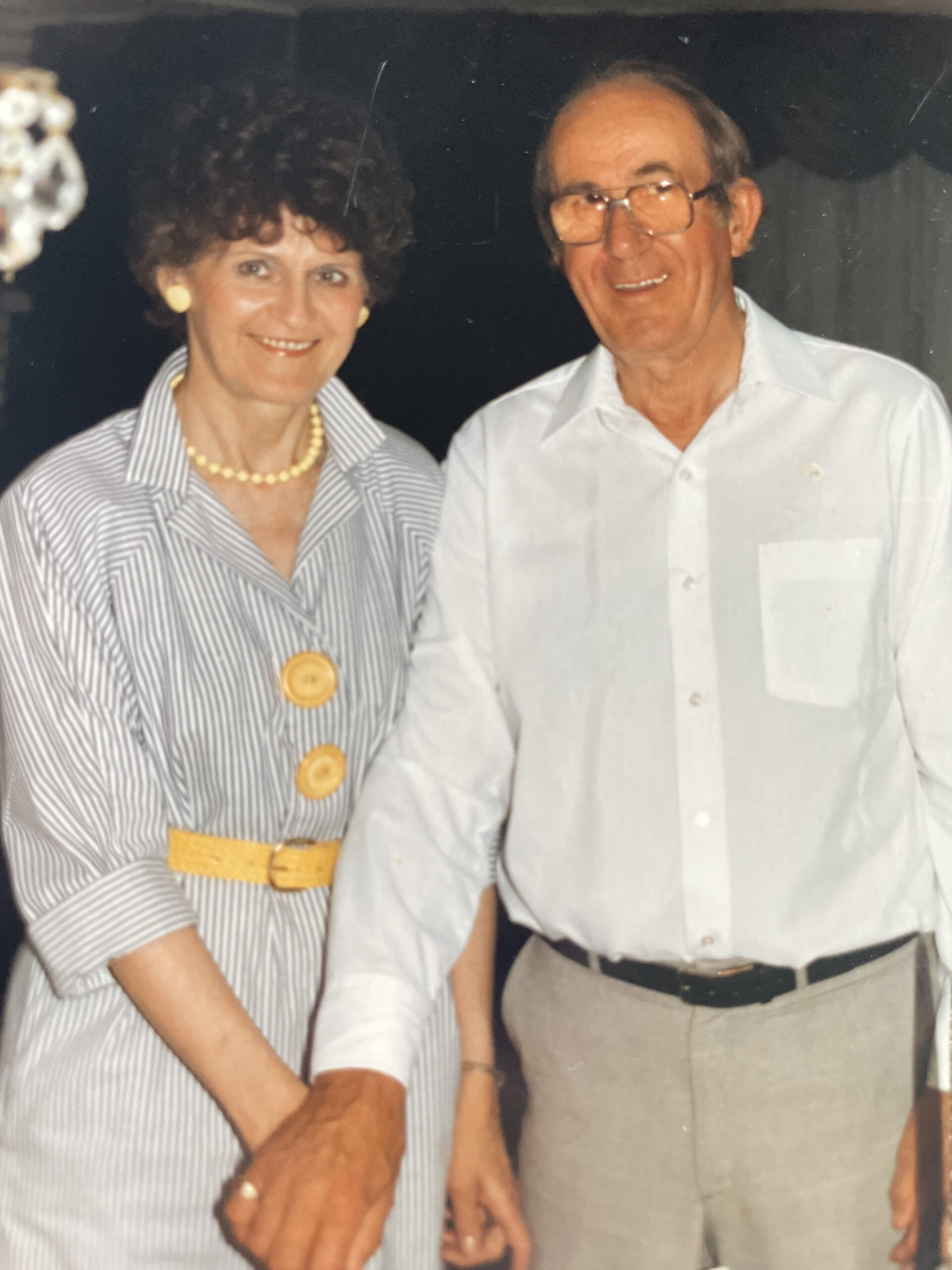
Wilfred
(with Mariette)
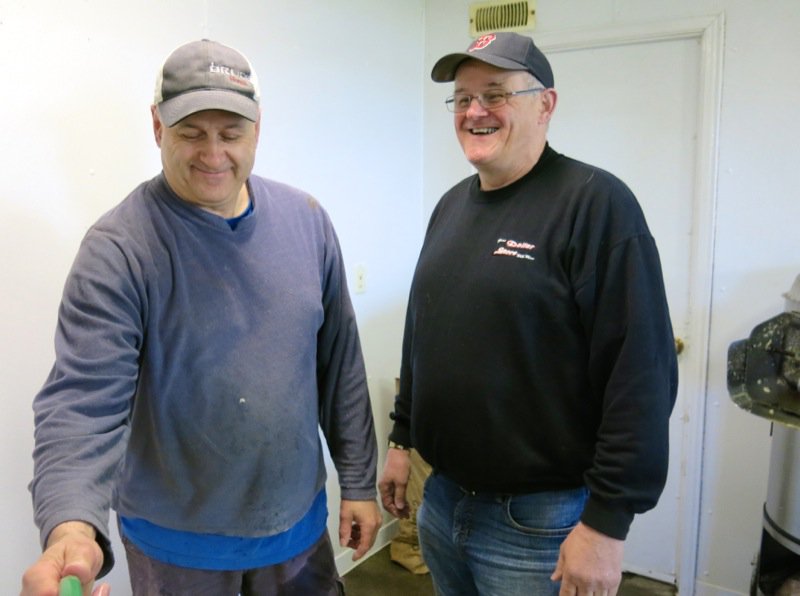
Johnny & Clayton

Dan & Rej
Rolling Through Nearly 100 Years: The D’Eon’s Bakery Story
Every family-owned bakery has a founding myth. Ours involves a fifteen-year-old Acadian fisherman, a fifty-dollar loan, a runaway toupée, and a man who took a dirty butter dish more personally than most people take an actual insult.
Arthur J. d’Eon — known up and down Pubnico as Arthur à Romain — was born in West Pubnico in 1886, the son of a schooner cook. He tried the family trade at sea, decided cod fishing was no life for a small man in a big wind, and turned to cooking instead. He found steady work in the lobster canneries dotting the coast, and it was there, catering for a factory owner’s visit, that a boss named John Neville made one offhand comment: the butter dish could’ve been cleaner. Arthur never let it go. For the rest of his life, every dish that left his kitchen was spotless — a small, stubborn standard that somehow became the whole reason a bakery exists.
In Pubnico, nicknames have long been more than terms of affection — they were practical. With generations of families sharing many of the same first and last names, nicknames helped sort out exactly which d’Eon, d’Entremont, Amirault or Surette you meant. Arthur was Arthur à Romain, identifying him through his family. But as cooking gave way to baking, he picked up another name: Farine — “flour” in French — a nickname that could hardly have suited the future founder of a bakery better.


By 1927, Arthur was working for a Yarmouth company, F.A. Smith, and decided to start baking on the side — a sideline, at first, to a small grocery business he already ran. He didn’t have the money for it: he borrowed fifty dollars from a friend to buy an oven. He didn’t have anywhere to put it either, until a widow who’d moved to the United States after her husband’s death offered him her empty house, rent-free, in exchange for someone keeping an eye on the place. Everyone called it the Addée house, and that’s where D’Eon’s began — sixty loaves of bread a week, delivered by the mail-truck driver, spring through fall only.
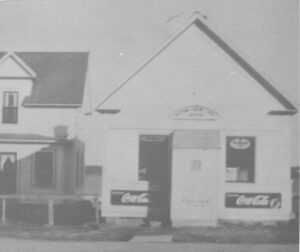
Arthur soon bought a small building of his own and had it moved next to his house. His son Wilfred “Wilf” helped him after school and on Saturdays, and once Wilfred finished school, the bakery got its first delivery truck. The name of the family-owned Acadian bakery changed to “A.J. d’Eon & Son,” and the daily route grew to cover Yarmouth and Shelburne, with stops along the way.
By 1962, Wilfred was running the show, and the old building couldn’t keep up. He went to the Caisse Populaire for a loan and built the bakery that — with additions — still stands today: a bright new building with a hardwood floor, a 180-loaf oven added to the old 90-loaf one, and lighting designed specially so the night shift wasn’t working in shadows. He designed it himself, right down to the two carved “jolly bakers” that flanked the sign on the roofline. The Yarmouth Herald called it a likely record for Nova Scotia — a bakery operation that size, owned outright by one person instead of a company, in a village as small as West Pubnico. Ten employees kept it running that year, including two of Wilfred’s daughters and his wife Mariette, whose wedding and celebration cakes were, by every account, the talk of the county.

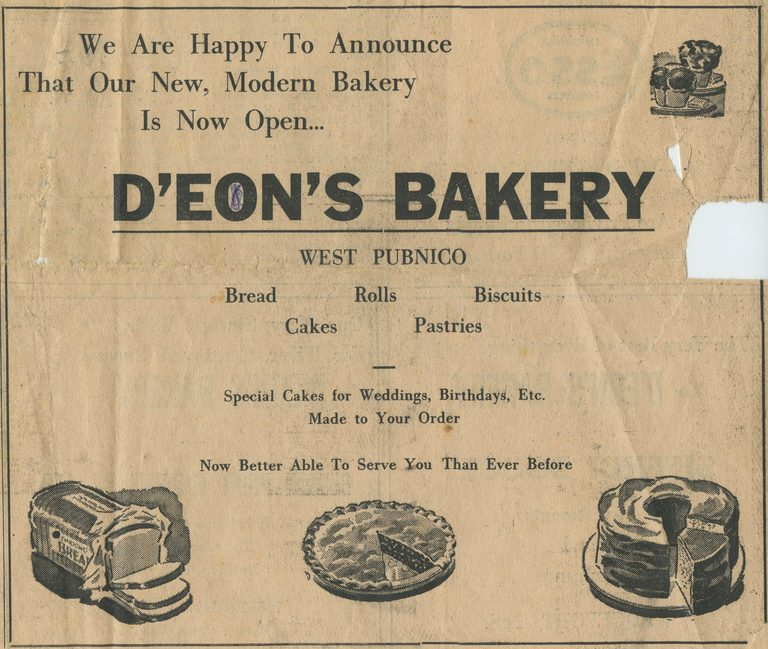
Arthur, retired by then but never far from the ovens, was a snappy dresser who wore a toupée to hide his bald spot — a toupée that once blew clean off in a windstorm, sending the whole neighbourhood into an impromptu search party. (Found in a hay field. Obviously.)
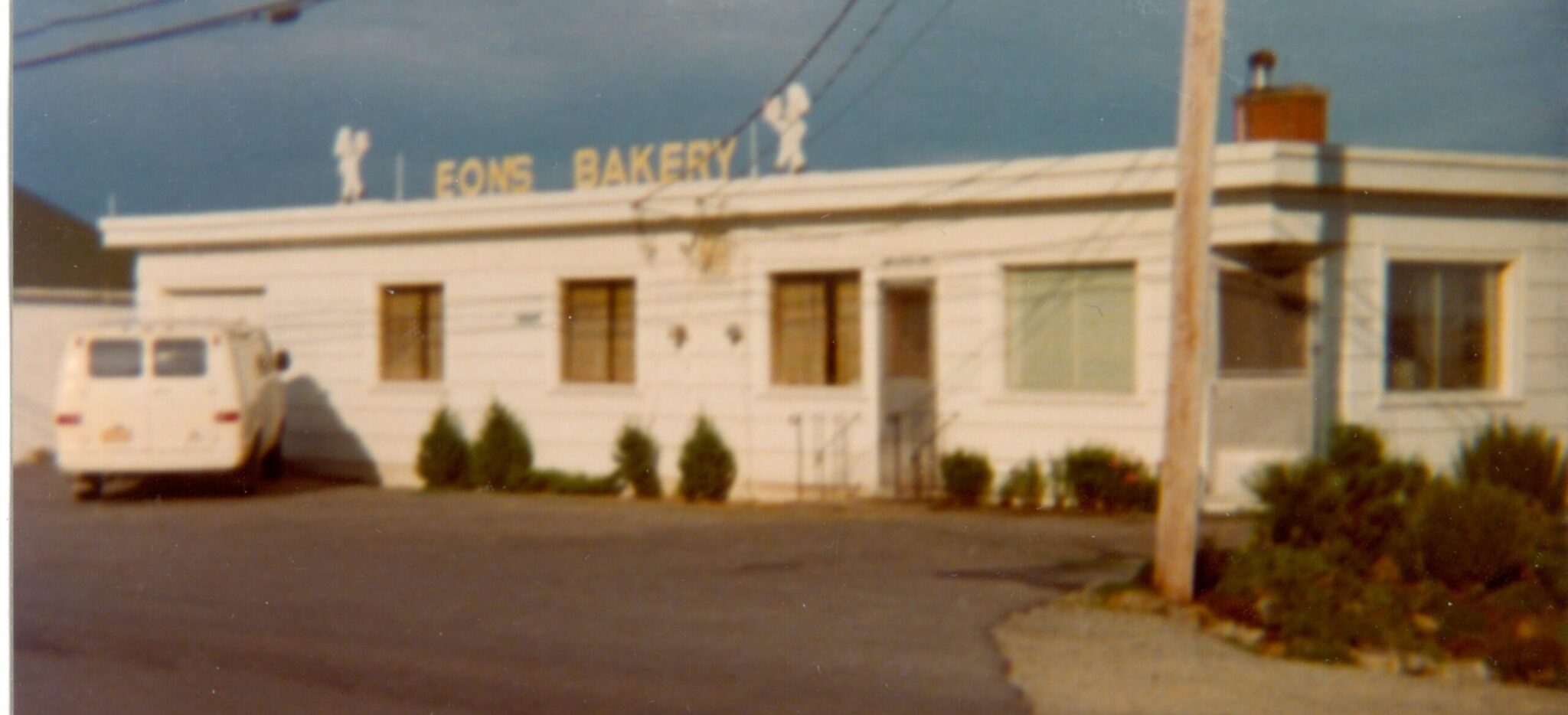
By the 1990s, Wilfred’s son Clayton had followed the same path his own father once had — helping out after school, then starting full-time the day after grade 12. Clayton and his brother Jean Édouard (“Johnny”) took over as owners, working roughly twelve-hour days, and grew the operation to twenty full-time staff plus a handful of after-school students. The product list had grown up too: alongside the bread, the rolls and the wedding cakes sat something newer — rappie pie, egg rolls with plum sauce, lasagna, baked beans, pizza. D’Eon’s was already becoming more than a bakery, decades before anyone wrote that down as a strategy.
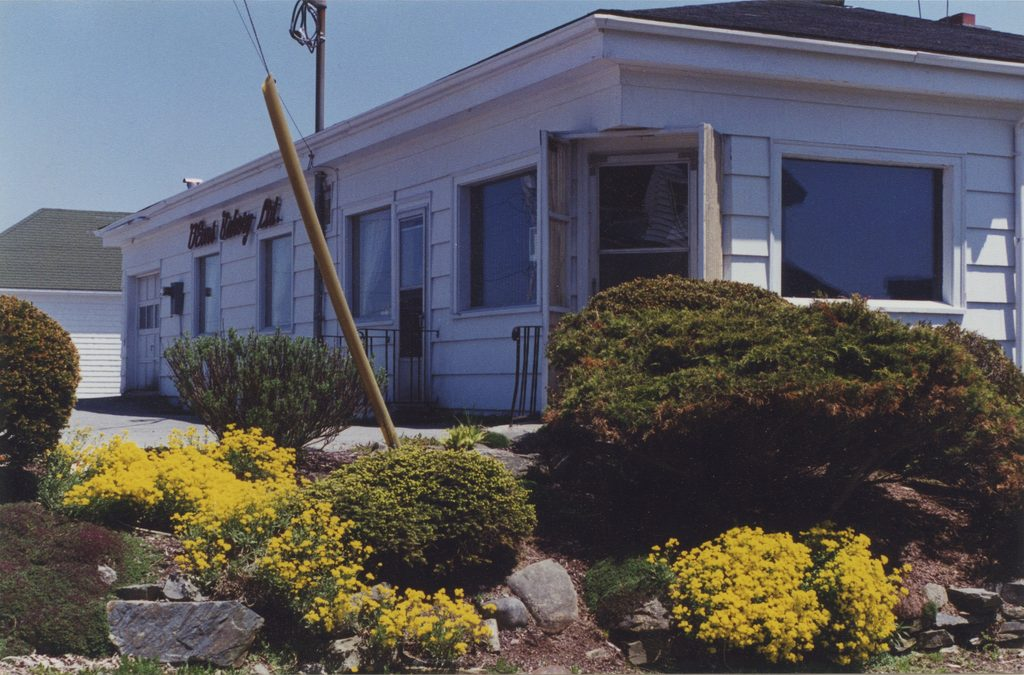
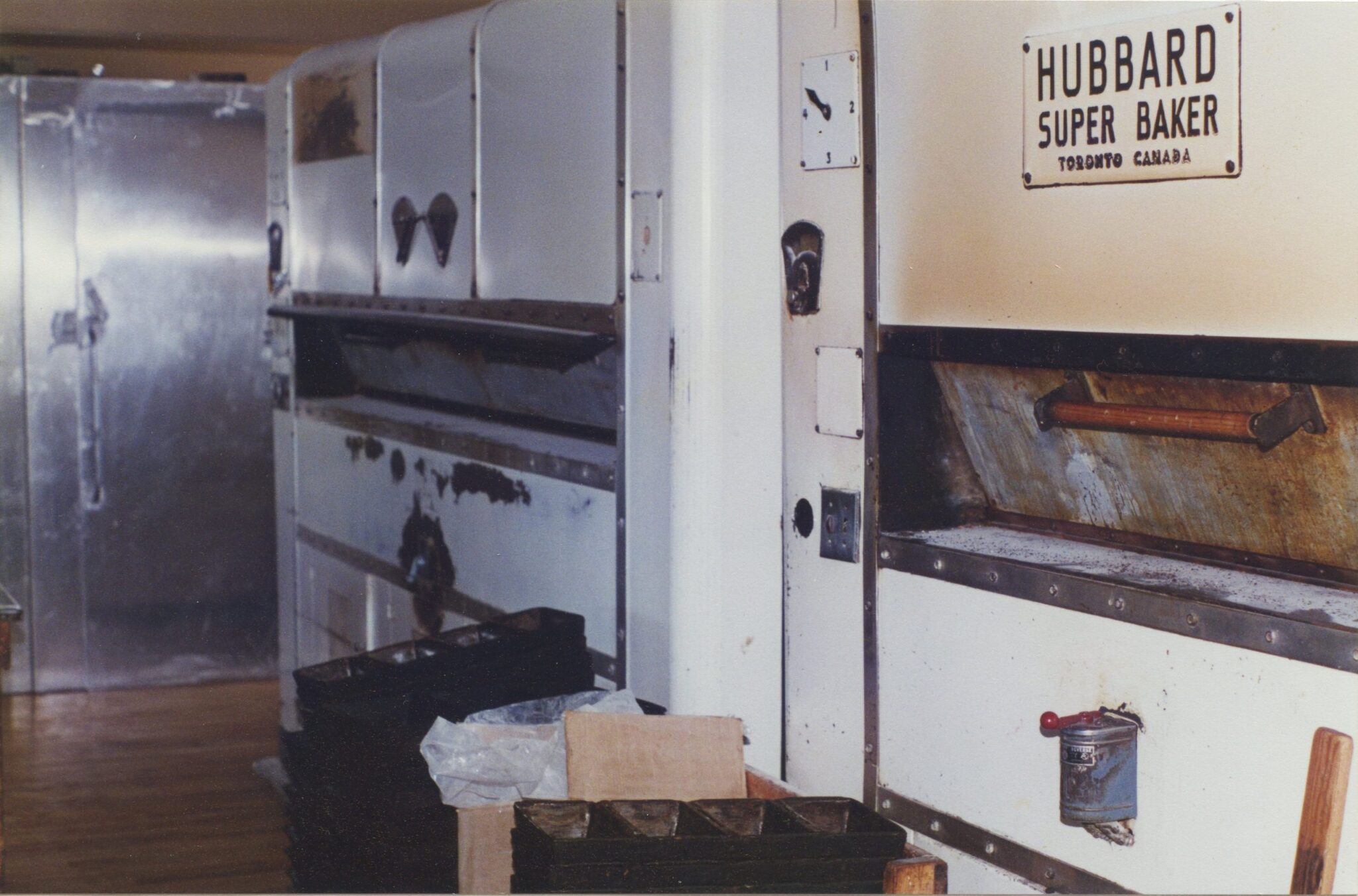
And now there’s a fourth generation learning the same hours.
Danille — known as Dan — is the eldest son of Clayton, and he’s built a career out of doing several jobs at once: full-time IT specialist, a side business in home and commercial tech systems, and a recording studio and music venture besides. If it runs on electricity, Dan’s probably involved. This past year, he and his brother, Rejean, officially became owners of the family business, and Dan now leads Growth & Strategy — the family habit of never doing just one thing clearly skipped no generations.
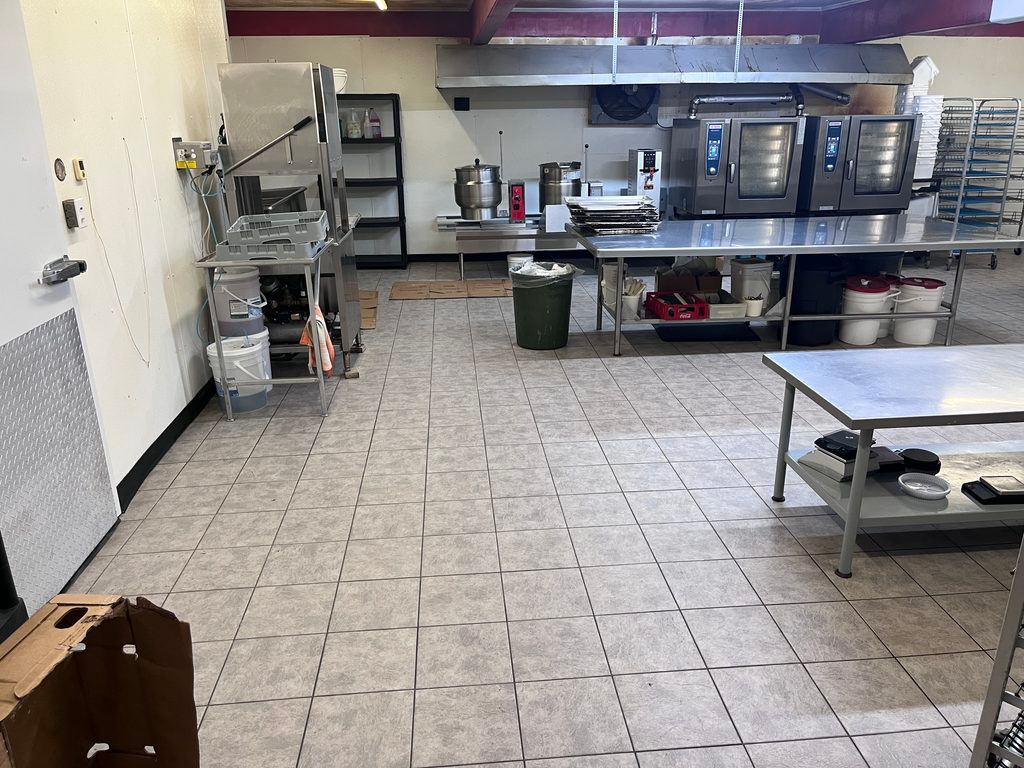
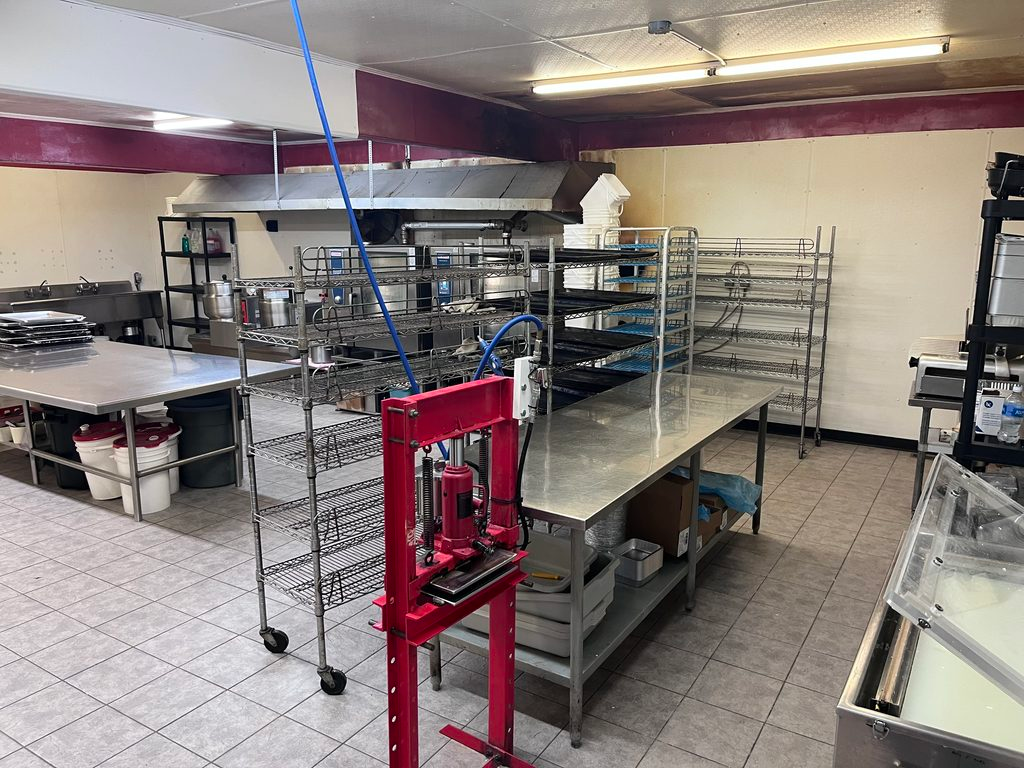
Four generations. Nearly 100 years. One butter dish that grand-grandpère Arthur would still be checking — and, if the Yarmouth Herald had it right back in 1962, quite possibly still the only bakery of its size in Nova Scotia that’s stayed entirely in one family’s hands.
Find D’Eon’s Rappie Pie in the freezer section at Sobeys, Atlantic Superstore, Foodland, Giant Tiger, and participating independent grocers across Nova Scotia — and watch this space as we count down to our 100th anniversary in 2027.